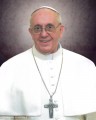
Pray for Pope Francis
Scroll down for topics
 100+ Important Documents in United States History
Apostolic Fathers of the Church
Biographies & Writings of Notable Catholics
Catholic News Commentary by Michael Voris, S.T.B.

(Death, Heaven, Purgatory, Hell)
Links to Churches and Religions
Links to Newspapers, Radio and Television
Links to specialized Catholic News services
General Instruction of the Roman Missal
****
****
****
****
Rite of Christian Initiation for Adults

Visits to this site
General Councils of the Church
- Jerusalem (Acts 15:2)
- When and where
- 49.
- Crisis or controversy
- Gentile converts must follow Mosaic Law; "Unless you are circumcised according to the Mosaic practice, you cannot be saved." Acts 15:1
- Attendees
- "Apostles and presbyters"
Acts 15:6, and the following notables:
Paul and Barnabas,
Peter, James (Acts 15:6-22) - Decrees and resolutions
- "It is the decision of the Holy Spirit and of us not to place on you any burden beyond these necessities." Acts 15:28
Nicea I
- When and where
- 325. (Now Iznik, Turkey, 70 miles from Constantinople on the Asiatic shore of the Bosporus)
- Crisis or controversy
- Christ was a pure creature; made out of nothing; liable to fall; the Son of God by adoption, not by nature: Arianism.
- Attendees
- 318 bishops, and the
following notables:
Convened: Constantine I, Emperor;
Eusebius of Caesarea, historian;
St. Athanasius, theologian;
Ratified: Silvester I, Pope. - Decrees and resolutions
- The Nicene Creed;
The Consubstaniality of the Word: homousion with the Father;
Solved how the date of Easter should be calculated.
Constantinople I
- When and where
- 381. (Now Istanbul, Turkey)
- Crisis or controversy
- The need to insist on
homousion;
Demonstrate to the world that Christians of the East are not Arians;
Apollinaris was teaching that Christ was not true man. - Attendees
- 186 bishops, and the
following notables:
Convened: Theodosius I, Emperor;
St. Basil the Great;
St. Gregory of Nyssa;
St. Gregory of Naz., theologians;
Ratified: Damasus, Pope - Decrees and resolutions
- Renewed the work of Nicaea;
Condemned the heresy of the Macedonians (the Holy Spirit was not really God);
Condemned the heresy of Apollinaris (that Christ was not really a man).
Ephesus
- When and where
- 431.
- Crisis or controversy
- Nestorius was teaching that
Mary was not the mother of God;
Proponents of Nestorius began claiming that Christ was actually two separate persons, human and divine. - Attendees
- 250 bishops, and the
following notables:
Convened: Theodosius II, Emperor;
St. Cyril of Alexandria;
St. John Chrysostom;
Ratified: Celestinus I, Pope. - Decrees and resolutions
- Condemned Nestorius;
Decreed that Mary was also Theotokos, mother of God;
Declared that Christ is true God and true man, that he has two natures (human and divine) joined in one person.
Chalcedon
- When and where
- 451. (Ancient seaport of Bithynia on the sea of Marmara)
- Crisis or controversy
- Monophysites were teaching that Christ had a single divine nature and no human nature.
- Attendees
- 600 bishops, and the
following notables:
Convened: Marcianus, Emperor;
Ratified: Leo I, Pope. - Decrees and resolutions
- Condemned Monophysitism;
Declared that Christ had two distinct natures and was both true God and true man;
Promulgated canons of church discipline.
Constantinople II
- When and where
- 553.
- Crisis or controversy
- Emperor Justinian I wanted the Church to consider the orthodoxy of three Greek theologians: Theodore of Mopsuestia, Theodoret of Cyrrhus, and Ebas of Edessa.
- Attendees
- 150 bishops, and the
following notables:
Convened: Justinian I, Emperor; - Decrees and resolutions
- Condemned the writings of theologians as having been infested with Nestorianism.
Constantinople III
- When and where
- 680.
- Crisis or controversy
- Monothelism was teaching that Christ did not possess a human will.
- Attendees
- 174 bishops, and the
following notables:
Convened: Constantine IV, Emperor;
Ratified: Leo II, Pope. - Decrees and resolutions
- Condemned Monothelism;
Declared that Christ has two wills, human and divine.
Nicaea II
- When and where
- 787.
- Crisis or controversy
- Iconoclasts taught that using sacred images was idolatry.
- Attendees
- 390 bishops, and the
following notables:
Convened: Irene, Empress;
Ratified: Adrian I, Pope. - Decrees and resolutions
- Condemned Iconoclasts;
Declared that sacred images may be honored without idolatry.
Promulgated canons of church discipline.
Constantinople IV
- When and where
- 870.
- Crisis or controversy
- Needed to decide the right of Patriarch Photius or the restoration of Ignatius.
- Attendees
- 102 bishops, and the
following notables:
Convened: Basil, Emperor;
Ratified: Adrian II, Pope. - Decrees and resolutions
- Photius was condemned in 27 canons.
Lateran I
- When and where
- 1123. (Basilica in Rome, Italy)
- Crisis or controversy
- Needed to face the social
and religious problems of the day;
First ecumenical council in the West. - Attendees
- 300 bishops, and the
following notables:
Convened: Callistus II, Pope;
Ratified: Callistus - Decrees and resolutions
- Promulgated canons of mixed matters.
Lateran II
- When and where
- 1139.
- Crisis or controversy
- A double papal election and ensuing schism when two rivals claiming to be pope divided the church.
- Attendees
- 1000 bishops, and the
following notables:
Convened: Innocent II, Pope;
St. Bernard of Clairvaux
Ratified: Innocent II. - Decrees and resolutions
- Took measures against
schism of antipope Anacletis II;
Promulgated canons of church discipline
Lateran III
- When and where
- 1179.
- Crisis or controversy
- Reorganization had to be faced; there was the ever-needed pressure to reform; restraint of abuses.
- Attendees
- More than 300 bishops, and
the following notables:
Convened: Alexander III, Pope;
Ratified: Alexander III, Pope. - Decrees and resolutions
- Decreed that papal
elections required two-thirds majority of cardinals at the conclave;
Promulgated numerous disciplinary canons.
Lateran IV
- When and where
- 1215.
- Crisis or controversy
- Albigensian heresy: two supreme beings, Evil and Good; Christ did not die; all material things must.
- Attendees
- 412 bishops; 388 priests,
and the following notables:
Convened: Innocent III, Pope;
Ratified: Innocent III, Pope. - Decrees and resolutions
- Declaration of Canon Law:
the law of the Church;
Decrees against Albegensians and Waldensians.
Lyons I
- When and where
- 1245. (City in E. France)
- Crisis or controversy
- The difficult and heretical
behavior of Emperor Frederick II;
The persecution of religion. - Attendees
- 140 bishops; more than 300
in toto, and the following notables:
Convened: Innocent IV, Pope;
Ratified: Innocent IV, Pope. - Decrees and resolutions
- Excommunication and deposition of Frederick II.
Lyons II
- When and where
- 1274.
- Crisis or controversy
- A marked decline of the
detachment of the popes from the things of the world;
Chronic restiveness of the Greeks toward Roman primacy. - Attendees
- 500 bishops; 570 priests,
and the following notables:
Convened: Gregory X, Pope;
St. Thomas Aquinas,
St. Bonaventure;
Ratified: Gregory X, Pope. - Decrees and resolutions
- General reformation of the
morals of clergy and bishops;
Dogmatic constitution of filioque;
Profession of faith of Greek Emperor Michael VIII.
Vienne
- When and where
- 1312. (City in E. France near Lyons)
- Crisis or controversy
- Problems with the religious order of Knights Templars.
- Attendees
- 122 bishops; 300 abbots,
and the following notables:
Convened: Clemens V, Pope;
Ratified: Clemens V, Pope. - Decrees and resolutions
- Templars were suppressed;
Canon Law enacted;
Three definition of dogmas;
Disciplinary decrees written.
Constance
- When and where
- 1414 - 1418. (City in Germany on Swiss border)
- Crisis or controversy
- The Great Western Schism: two sets of popes.
- Attendees
- 32 Cardinals; 183 bishops;
100 abbots; 350 priests, and the following notables:
Convened: Segismund, Emperor;
Ratified: Martin V, Pope. - Decrees and resolutions
- Reformation of the Church;
Material organization of religion.
Florence
- When and where
- 1438. (City of N. Italy)
- Crisis or controversy
- East/West reunion;
Constantinople was being threatened by Mohammedans. - Attendees
- more than 150 bishops, and
the following notables:
Convened: Eugene IV, Pope;
Ratified: Eugene IV, Pope. - Decrees and resolutions
- Reunion of oriental churches.
Lateran V
- When and where
- 1512 - 1517.
- Crisis or controversy
- Needed reform in church
administration;
Rise of atheistic philosophy;
Friction between bishops and orders of friars. - Attendees
- 115 bishops, and the
following notables:
Convened: Julius II, Pope;
Cajetan;
Ratified: Leo X, Pope. - Decrees and resolutions
- Condemned the Averroes
philosophy: the soul of man is not immortal;
Promulgated reform decrees;
Established principles of book censorship;
Rights of bishops defined.
Trent
- When and where
- 1545 - 1563. (in Hapsburg's Germany; now N. Italy)
- Crisis or controversy
- Martin Luther;
Revolt against the Pope;
Widespread heresy. - Attendees
- 70 - 252 bishops, and the
following notables:
Convened: Paul III, Pope;
Ratified: Pius IV, Pope. - Decrees and resolutions
- Doctrinal decrees:
restatement of belief in opposition to the new theologies;
The Catholic Reformation: the reformation of Catholic life.
Vatican I
- When and where
- 1870. (St. Peter's Bascilica)
- Crisis or controversy
- A return to life of the
Catholic Church: needed a revival of religious life
General restoration and restatement of the faith was needed;
Christian marriages and education needed safeguarding. - Attendees
- 747 bishops, and the
following notables:
Convened: Pius IX, Pope;
Ratified: Pius IX, Pope. - Decrees and resolutions
- Promulgated decrees on the
Catholic Faith and on the Church;
Condemned the Rationalists and Semirationalists;
Defined the charism of infallibility.
Vatican II
- When and where
- 1962 - 1965.
- Crisis or controversy
- Constant need for reform
and revival;
Needed translation of faith into modern era: communication media;
Christians and Jews; religious freedom, etc. - Attendees
- 2908 bishops, and the
following notables:
Convened: John XXIII, Pope;
Ratified: Paul VI, Pope. - Decrees and resolutions
- Issued 16 documents:
On Divine Revelation;
The Pastoral Constitution;
On The Church in the Modern World;
On The Church