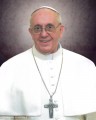
Pray for Pope Francis
Scroll down for topics
 100+ Important Documents in United States History
Apostolic Fathers of the Church
Biographies & Writings of Notable Catholics
Catholic News Commentary by Michael Voris, S.T.B.

(Death, Heaven, Purgatory, Hell)
Links to Churches and Religions
Links to Newspapers, Radio and Television
Links to specialized Catholic News services
General Instruction of the Roman Missal
****
****
****
****
Rite of Christian Initiation for Adults

Visits to this site
COPTS TROUGH THE AGES
(By Dr. Jackie Ascott, Ph.D.)
The Coptic Orthodox Church of Alexandria is a very conservative Church,
which preserves most carefully the Christian Faith, in its earliest and
purest form, passed on from generation
to generation, unaltered and true to the
Apostolic doctrine and patterns of worship. It is a deeply
spiritual and even mystical
Church, with an emphasis upon holiness, and the Mysteries of
Faith, but at the same time it is a strongly doctrinal
Church, holding faithfully to the canons
of the Holy Scripture and the Apostolic and Orthodox Creeds
and Teachings of the Church Fathers of the first three
Ecumenical Councils.
The Coptic Church is one
of the most ancient Churches in the World (along side the Churches
of Jerusalem, Antioch, and Rome), having been founded
by Saint Mark the Apostle, during the first century A.D.
(traditionally, in 43 A.D. or 61 A.D.). Eusebius
states, in his Ecclesiastic History, that Saint Mark
came to Egypt during the first or third year
of the Roman Emperor Claudius (i.e. in 41-42 A.D. or 43-44 A.D.) and
he visited Alexandria again, to preach and
evangelize, between 61 and 68 A.D.
Saint Mark's first convert was a shoemaker
of Alexandria, Anianus, who was consecrated a
bishop, and later succeeded him as Patriarch. Saint Mark was
the first Patriarch of the Coptic Church, and he
received his martyrdom in Alexandria on
the Feast of Resurrection (Easter) in 68 A.D. at the hands of Pagan
Egyptians who were celebrating the feast of Serapis in the great temple
of Serapium. The Patriarchs of the Coptic Orthodox Church have
continued in a line of unbroken succession from Saint
Mark until the present day. The current Patriarch,
Pope Shenouda III, is the one hundred and seventeenth Patriarch to
occupy the Chair of Saint Mark in the See of
Alexandria. The full official title of the Patriarch of the Coptic
Orthodox Church is "Pope and Patriarch of the
great city of Alexandria, the Middle East, Ethiopia,
Nubia, and the Pentapolis.
Throughout the years the Coptic Orthodox
Church has stood firm and has remained
faithful to her Apostolic Traditions and Orthodox Faith,
despite waves of fearful persecutions under pagan
Roman Emperors, and to lesser extent
under Byzantine and Arab rulers, and in the face of
serious heresies that attacked the very fiber
and essence of the Christian Faith and threatened to
split the Church and all of Christendom.
The Egyptians were a deeply religious race
by nature and they responded gladly to the
preaching of Christian Faith, having been left with a
deep spiritual vacuum following the final
dethronement of their Pharaoh and god, and the
decline of the ancient Egyptian Religion, with its symbol of Ankh, the
triads of gods, the eminence of the gods in the land of
Egypt, the national devotion to the goddess Isis
and her son Horus, the death and the resurrection of a
god, and the concepts of future judgment and immortality, had done much
to prepare the people for the coming of Christianity.
The Egyptians were naturally proud of the
fact that Christ has hallowed their land with
His presence, during His earthly life. Egypt
was indeed blessed by God, as His people (Isaiah
19:25; Hosea 11:1).
In 30 B.C., after the defeat of Mark
Anthony at the battle of Actium, Egypt has been
incorporated into the Roman Empire, bringing an end to the rule
of Ptolemies and sounding the final death knoll for the great 3,000
year long Ancient Egyptian Civilization.
Egypt now became the granary of Rome, and a source of personal wealth
for the Emperor, which resulted in a serious drain
upon the resources of the land and the people. However,
the external Roman imperial conflicts and troubles over succession to the
throne did not directly affect Egypt, and she
enjoyed a period of little political change, in which
the major event and development was the spread of Christianity
throughout the land.
By the end of the Second Century,
Christianity was well established in Egypt,
although there were still pockets of paganism existing side by
side with the new Faith. By 190 A.D., the great Church
of Alexandria was exchanging Paschal epistles
with the Churches of Jerusalem and Antioch, concerning the
date of Easter, and there were about forty Bishoprics, under the
Patriarch of Alexandria, in the
North of the country (in the Delta area). By 202 A.D.
Eusebius mentioned that there were Christians in the whole Thebaid,
in Upper Egypt, 800 km up the Nile
Valley. Saint Athanasius states, in his Festal
letters, that there were Christians in the small and large oases, in the
heart of the desert, by 329 A.D.
During the first
centuries of the Christian Church, the
famous Catechetical School of
Alexandria was an important light and means
of instruction in the Christian Faith and the study of theology, as
well as of knowledge in the Sciences, and the need to discuss and
interpret their faith within the
philosophical and intellectual milieu of Alexandria
scholarship and learning.
The pre-Christian school had been founded
by Ptolemy Soter in 323 B.C., and during the region of
Ptolemy Philadelphus in 288 B.C., it was developed to
include, not only Greek philosopher, but also other nationalities, such as the
70 Jewish Rabbis who worked on the Septuagint Greek
translation of the Old Testament in Alexandria.
The School of Alexandria contained the world famous
Library and Museum (the Pagan School), and it became the major set of
learning and philosophy for the whole of the Ancient
Hellenistic World.
The Christian School
of Alexandria (called Didascalium) offered instruction
in the Christian faith and theology, along side study of the civil
science, such as philosophy, medicine, physics, chemistry, anatomy,
physiology, mathematics, geometry, astronomy,
history, geography, music, and ancient and modern languages. It was open
for Catechumens (pagans who believed in Christ
but who had not yet been baptized), and for Deacons or Christian
students who desired a deeper knowledge and
understanding of Christian Doctrine and Faith,
as well as for pagans students who were still searching for the Truth.
According to Tradition,
St. Mark had opened the first Christian
Catechetical School in Alexandria for the instruction of the new
converts, and during the following two
centuries, the Didascalium developed and expanded
under the Deanship of great philosophers and
doctors of theology, such as Athenagoras, Pantaenus, St. Clement of
Alexandria, Origen, St. Athanasius and, St. Didymus
the Blind.
Under the supervision of
St. Pantaenus and St. Clement, the New
Testament was translated from Greek into Coptic, a translation
which is still highly respected and
used to this day in the Coptic Orthodox Church. The
Catechetical School of Alexandria has also
the Canon of Holy Scripture. Several of
the early Deans of the School also became Patriarchs, like
Abba Justus, the first dean of the School,
who became the 6th Patriarch (132-143 A.D.);
Abba Eumanius, 7th Patriarch (143-154 A.D.); Abba
Markianos, 8th Patriarch (154-163 A.D.); Abba
Heraclus, 13th Patriarch (232-249 A.D.); Abba
Dionysius, 14th Patriarch (249-270 A.D.); Abba
Petros, the "Seal of the Martyrs", 17th
Patriarch (293-303 A.D.), and Abba Archelaus, 18th Patriarch
(303 A.D.). Other distinguished teachers or graduates of
the school became Patriarchs of the
Coptic Church, among whom were Abba
Alexandros, 19th Patriarch (303-326 A.D); St.
Athanasius the Apostolic, 20th Patriarch (378-384
A.D.); Abba Kyrillos "The Pillar of Faith", 24th Patriarch (412-443 A.D.)
and Abba Dioscorus, "The Interpid Hero",
25th Patriarch (444-456 A.D.). These
early Patriarchs were considered the "Guardians of
Orthodoxy" and their learning earned them the reputation of
"Universal Teachers".
Graduates from other
theological schools, in other parts of the
Christian World, later came to study at the school of
Alexandria, including St. Gregory the Theologian
(329-389 A.D.); St. Basil the Great (330-379 A.D.);
St. John Chrysostom (347-407 A.D.); St. Jerome (342-420 A.D.) and St.
Rufinus (345-410 A.D.). Thus the
School of Alexandria became the Lighthouse of
Christianity, for a span of five centuries, until the reign of Justinian
(529 A.D.). After 451 A.D. and
the Council of Chalcedon, the Emperors of
Constantinople, in their persecution against the Copts, closed the
school and carried away most of the books, The
main center of learning for the Coptic
Church was then transferred to the Monastery of St.
Macarius, in the Wadi El-Natroun desert, where
it continued for several centuries.
The Church of Egypt enjoyed peace for
almost the first two centuries of her existence,
until A.D. 203, when the Emperor Septimus Severus issued an edict
forbidding conversions to both Christianity and
Judaism. Torture, martyrdom, and the temporary closure of the
School at Alexandria resulted. Great
persecutions were suffered under Emperor Decius (249-251 A.D.)
and in 250 A.D., an imperial edict decreed the
enforced offering of worship of idols by every
Roman subject, upon the penalty of execution. Cruel persecutions of
the Christians continued under Emperor Gaius (251-253 A.D.) and
under Emperor Valerian (253-260 A.D.), until the Edict
of Tolerance, issued by his successor, Gallienus
(260-268 AD), which brought a temporary end to the persecution and
allowed churches to be built.
However, this period of peace
was only a short respite, for with the acceptance to the imperial throne
of "Diocletian" in A.D. 284, the most severe and bloodiest period of
persecution of the Coptic Church began. In A.D. 303,
"Diocletian" issued a decree that ordered all churches to be
demolished, all Scriptures and sacred
books be burnt and all Christians, who were
not officials, to be made slaves. This intense period of persecution
resulted in the widespread of torture and
the martyrdom of thousands of Christians,
because of their courageous testimony for Christ. So
many Coptic Christians lost their lives during this
period, for their faith, that the Coptic Church dates her calendar
from A.D. 284, the year of accession to the imperial throne of Diocletian, and
the beginning of the Era of Martyrs (Anno Martyri or A.M.).
After the Abdication of
Diocletian and the succession of Galerius
(305-311 A.D.) and Maximinus Daia (311-313 A.D.), there was a
brief respite for Egyptian Christians, but it
was not long before a new Edict of Persecution was issued by these two
rulers. Only after the accession to the imperial
throne of Constantine the Great, his conversion to Christianity and the
Edict of Tolerance in A.D. 313, after the Battle of
Milan, did Christianity become the
recognized religion of the Empire, and the waves of
cruel persecution under the pagan Roman
emperors finally ceased. The Martyrdom in A.D. 312, of
St. Peter, the "Seal of the Martyrs", 17th Patriarch of
Alexandria, has set the seal on this terrible
period of persecution of the Egyptian Church.
The Coptic Synaxarion (selected
biographies of Martyrs and Saints for Each day of the
year) and the Coptic "Difnar" (Antiphones for the Saint
or Saints of the day) are full of stories of these
courageous Martyrs. The Feast day of the martyrs is
still celebrated on 1 TUT, the first day of the Coptic
New Year (11/12 September), to commemorate the
faithfulness of these men, woman and
children martyrs, whose blood indeed became the "seed of the Church"
(Tertullian).
Between these waves of persecution however,
Christianity spread through Egypt quite rapidly,
helped by the siege of Alexandria, which resulted in the movement and
importation of soldiers, many of whom were Christians, and also
encouraged by zealous and fearless witness of the Martyrs and Confessors.
The New faith spread first to Fayoum, which was visited by
Anba "Dionysius" in about A.D. 257, and then about 100
km further south. It does not seem to have
reached much beyond this until after the time of Decius.
After the edict of
tolerance, issued by Gallienus in A.D. 260,
Christianity quickly spread further south into the
Thebaid, and it was here that the great
persecutions of Diocletian were most greatly felt. However,
Christianity was still not the the religion of the majority of Egyptians,
even in the North, although by the
end of the 3rd century, over one hundred
Bishoprics were established in Egypt. It was only during the 4th
Century that the pagan masses of Middle and Upper
Egypt were in stages won to Christianity. In A.D. 300,
in Oxyrhynchus, there were still twelve Temples and
only two Churches. During the 5th Century the
situation was reversed and by the 6th
Century there were thirty Churches in the vicinity.
After A.D. 313 and the Edict of
Tolerance, issued by Constantine the
Great, Egypt entered into a new era in her
history, now under Christian Byzantine
rule that was to last until the Islamic Conquest
in A.D. 641, Christianity was
officially recognized in Egypt, as it was through
the Mediterranean world, and the Imperial capital was
transferred from the West to Byzantium, which was also
renamed Constantinopole. With the new freedom of the Church, a rapid
growth of Christianity took place in Egypt, resulting in a
mass conversion of the pagan Egyptians
to the Christian faith, as is documented in the
manuscripts of episcopal lists and monastic writings.