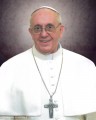
Pray for Pope Francis
Scroll down for topics
 100+ Important Documents in United States History
Apostolic Fathers of the Church
Biographies & Writings of Notable Catholics
Catholic News Commentary by Michael Voris, S.T.B.

(Death, Heaven, Purgatory, Hell)
Links to Churches and Religions
Links to Newspapers, Radio and Television
Links to specialized Catholic News services
General Instruction of the Roman Missal
****
****
****
****
Rite of Christian Initiation for Adults

Visits to this site
|
Oregon bishops call on faithful to encourage vocations to priesthood 01/12/2006 Oregon Sentinel Oregon’s Catholic bishops are intent on fostering more local vocations to priesthood. High among the hopes of a bishop is providing priests so that Catholics can readily participate in the sacraments. Among other vocations projects, Portland Archbishop John Vlazny hosts an annual retreat the weekend of Jan. 20–22 to speak to men who have shown interest in the life. Baker Bishop Robert Vasa has made vocations one of his three priorities and writes regular notes of encouragement to be placed in parish bulletins all over Central and Eastern Oregon. The efforts are showing fruit. The archdiocese now has 31 seminarians, the most in at least 25 years. The Diocese of Baker has two men in formation and has hopes for more. The bishops want to continue the work of cultivation. “One can never become too self-assured in these matters,” Archbishop Vlazny writes in his Sentinel column this week. The number of seminarians for the archdiocese has doubled since he arrived in Portland eight years ago. “The secular culture discourages commitment, even with respect to marriage,” the archbishop writes. “A commitment to celibate chaste living seems almost Neanderthal in today’s sex-crazed world.” In 1965, 994 men in the United States were ordained as Catholic priests. This past year, the number was 454. The corps of priests 40 years ago numbered more than 59,000. Today, it’s 43,000. All this with a Catholic population that has grown from 45.6 million to 64.8 million. Archbishop Vlazny acknowledges that the child sexual abuse scandal has “worsened matters” when it comes to vocations. But most candidates are aware that the crimes of a few should not be assigned to all priests, says Father Kelly Vandehey, the archdiocese’s director of vocations. “They don’t usually bring up the scandal, but I do,” Father Vandehey says. “I say, ‘We have a very ugly face before the media and the people now, but here you say you want to be a priest. How do you reconcile that?’ They always seem to understand it is a few people.” He admires the courage of today’s candidates, especially considering the rigorous psychological evaluations they undergo. Most people Father Vandehey works with have been referred by pastors or religious — an ever-increasing number make their first contact with him via email. Often, he has to cool their jets a bit, saying that entering seminary is not the end of the decision, but the start of a new phase of discernment. He helps them identify their fears and enthusiasms. Father Vandehey reports an increase of interest among people in their 20s. But the inquiries continue from older people, too. The vocations director says the archbishop is among the best spokesmen for the life. That has been a huge help. “He has an incredible presence among the people,” Father Vandehey explains. “What he manifests is a priest who is enthused about what he does.” On the vocations retreats, says Father Vandehey, the archbishop “speaks very honestly and from a perspective of incredible faith.” Father Vandehey and the archbishop trek across the archdiocese regularly for Andrew Dinners, named after the apostle-fisherman who was among the first to answer the Lord’s call. At the dinners, young men interested in priesthood hear the archbishop, the vocation director and the local priest tell the story of their vocations. Father Vandehey works with the vocations directors of the many religious communities who serve in the state. Those inspired by religious life gather monthly with the directors. Archbishop Vlazny has called on all parishioners to increase their awareness of the need for vocations to ordained ministry and consecrated life. Prayer and support are crucial, but even more important is living a good Christian life as an example to youth. “If our emotional maturity is lacking and our lives of faith are shallow, then it is most unlikely that ours will be the fertile soil where the seed of a vocation will flourish,” he wrote. In Bend, Bishop Vasa has issued a similar call. Writing last year about the youths he meets at confirmations, he is asking people in the pews to be agents of vocations. “Fine young people like these have been present in our parishes for decades, and yet there appear to be many who never saw them as potential vocations to the priesthood or religious life,” he wrote. “This is precisely why I believe it is accurate to say that there is not any shortage of young men whom God is gracing with a call to priesthood; there is only a defect in our noticing of them. There is not any shortage of young women whom God is gracing with a call to religious life; there is only a defect in our noticing of them.” Bishop Vasa contends that Catholics tend to view vocations as something in someone else’s home. “I wonder, in truth, how many of our Catholic people, upon hearing of the need for good and holy priests and religious, actually go through the list of their own sons and daughters asking God to give them the grace of a call and the heart to respond?” he wrote last year. The bishop has asked parishioners to pray regularly for vocations, even asking families to pray for young people by name. In the parishes of eastern and central Oregon, the people and priests are staying alert for vocations. “We just pray and pray for it,” says Evelyn Zurfluh of St. Thomas Aquinas Church in Crane. Young people have so many options for material things that are hard to give up, says. But she thinks they will come around. Demographics are also an issue. The small mission church has only two teen-aged boys at this point, Zurfluh reports. At St. Patrick Parish in Vale, Father Francis Xavier Ekwugha offers an African perspective on the vocations issue. In his native southern Nigeria, he says, people highly value their faith priests and religious. The result is many vocations, he says. “If you want vocations, we must make the life of the priesthood attractive, and I am not talking about money,” Father Ekwugha says. “My people like to respect priests. The first person you talk to is the priest. Young priests are so much supported by the community. It boosts the morale.” He urges parents to talk about vocations in their homes. In recent short articles for parish bulletins, Bishop Vasa has cited Mary as a model for those considering priesthood and religious life. “I sense that our young people are a little afraid of what it means to follow Jesus more intimately in a vocation to priesthood or religious life,” he wrote. In another reflection, he wrote of the choices as “a singular and dedicated vocation to give oneself wholly and entirely to Christ, His Church and His people.” A long-standing group of laity called Serra Club has been supporting and promoting vocations in the Archdiocese of Portland for decades. A Baker Diocese Serra Club has just begun. — Ed Langlois Obstacles to vocations Asked about the obstacles that keep young people from hearing God’s call, Archdiocese of Portland vocations director Father Vandehey hesitates. Then he shyly cites protective parents who are zealous for grandchildren. The priest often hears mothers and fathers opposing their child’s plan to pursue consecrated life. “Parents have worked so hard at getting children what they wanted, and now they see their children talking about sacrifice,” he says. “It is hard to get over. Parents try to protect their kids from the countercultural life.” In the central and eastern Oregon Diocese of Baker, Bishop Robert Vasa sounds a similar alarm. “Parents are afraid for their children who show some signs of wanting to follow Christ more closely,” he wrote in a recent parish bulletin article. “To both I say, do not be afraid!” Alongside this, church leaders admire today’s youth. Father Vandehey sees the generation as endowed with a “tremendous drive” for service to others. That drive is helpful on the way to embracing priesthood or religious life, Father Vandehey says, but those who answer the call also have had a spiritual experience, plus a pattern of healthy relationships that will allow them to be part of someone else’s life.
|
