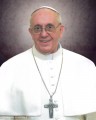
Pray for Pope Francis
Scroll down for topics
 100+ Important Documents in United States History
Apostolic Fathers of the Church
Biographies & Writings of Notable Catholics
Catholic News Commentary by Michael Voris, S.T.B.

(Death, Heaven, Purgatory, Hell)
Links to Churches and Religions
Links to Newspapers, Radio and Television
Links to specialized Catholic News services
General Instruction of the Roman Missal
****
****
****
****
Rite of Christian Initiation for Adults

Visits to this site
Haiti Officially Sanctions Voodoo
MICHAEL NORTON ASSOCIATED PRESS PORT-AU-PRINCE, Haiti (AP) -Haiti's government has officially sanctioned voodoo as a religion, allowing practitioners to begin performing ceremonies from baptisms to marriages with legal authority.
Many who practice voodoo praised the move, but said much remains to be done to make up for centuries of ridicule and persecution in the Caribbean country and abroad.
Voodoo priest Philippe Castera said he hopes the government's decree is more than an effort to win popularity amid economic and political troubles.
"In spite of our contribution to Haitian culture, we are still misunderstood and despised," said Castera, 48.
In an executive decree issued last week, President Jean-Bertrand Aristide invited voodoo adherents and organizations to register with the Ministry of Religious Affairs.
After swearing an oath before a civil judge, practitioners will be able to legally conduct ceremonies such as marriages and baptisms, the decree said.
Aristide, a former Roman Catholic priest, has said he recognizes voodoo as a religion like any other, and a voodoo priestess bestowed a presidential sash on him at his first inauguration in 1991. "An ancestral religion, voodoo is an essential part of national identity," and its institutions "represent a considerable portion" of Haiti's 8.3 million people, Aristide said in the decree.
Voodoo practitioners believe in a supreme God and spirits who link the human with the divine. The spirits are summoned by offerings that include everything from rum to roosters.
Though permitted by Haiti's 1987 constitution, which recognizes religious equality, many books and films have sensationalized voodoo as black magic based on animal and human sacrifices to summon zombies and evil spirits.
"It will take more than a government decree to undo all that malevolence," Castera said, and suggested that construction of a central voodoo temple would "turn good words into a good deed."
There are no reliable statistics on the number of adherents, but millions in Haiti place faith in voodoo. The religion evolved from West African beliefs and developed further among slaves in the Caribbean who adopted elements of Catholicism.
Voodoo is an inseparable part of Haitian art, literature, music and film. Hymns are played on the radio and voodoo ceremonies are broadcast on television along with Christian services.
But for centuries voodoo has been looked down upon as little more than superstition, and at times has been the victim of ferocious persecution. A campaign led by the Catholic church in the 1940s led to the destruction of temples and sacred objects.
In 1986, following the fall of Jean-Claude Duvalier's dictatorship, hundreds of voodoo practitioners were killed on the pretext that they had been accomplices to Duvalier's abuses.
President Aristide is a former priest of the Society of the Divine Word (SVD), the Salesians.
Haiti is pretty much a single party banana republic now, and Aristide just another in a long line of dictators.